More Than Just Paying: How Digital Wallets Quietly Hold Our Family Together
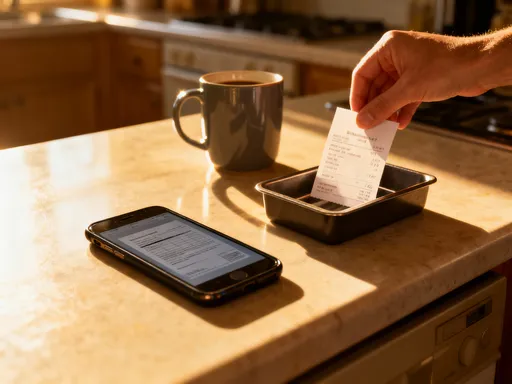
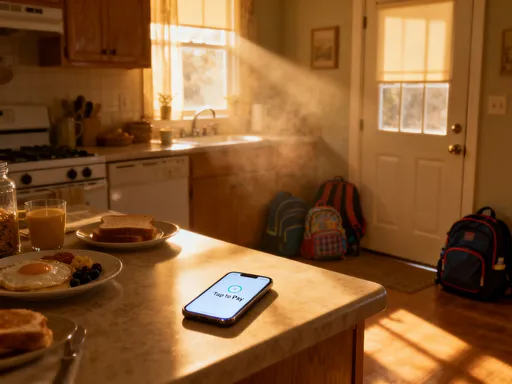
Every morning begins the same way: coffee brewing, kids scrambling for backpacks, and a quick stop at my phone before heading out. One tap pays the school snack fee. Another covers the gym membership. No cash, no stress. These small moments used to be full of forgotten bills and last-minute panic. Now, they flow—smoothly, quietly. That’s not just convenience. It’s peace. And it’s keeping our family one step ahead. I used to carry a mental checklist longer than my grocery list—pay the tutor, renew the library pass, send money for the class trip. Half the time, I’d remember only after the deadline passed. But now? Those things just… happen. Not because I’ve become super organized, but because the tools I use every day quietly take care of them in the background. It feels like magic, but it’s really just smart design meeting real life.
The Morning Rush: When Little Things Cause Big Stress
Mornings in my house are beautiful chaos. Shoes go missing. Someone always forgets their lunchbox. And more than once, I’ve pulled up to the school gate only to realize I hadn’t paid the field trip fee. I remember one chilly October morning—my daughter standing by the car, eyes wide, asking, 'Mom, did you pay? Everyone else did.' I hadn’t. The guilt hit hard. Not because it was a huge amount, but because I’d let her down in a way that felt so preventable. That moment stayed with me. It wasn’t just about money—it was about trust, reliability, and showing up for my family in the small ways that add up.
And it wasn’t just school trips. There were music class dues, sports registration, birthday gifts for classmates, even last-minute donations for bake sales. Each one felt like a tiny obligation, but together, they created a constant hum of low-grade anxiety. I’d write reminders on sticky notes, only to lose them. I’d set phone alarms, but sometimes they’d go off at the wrong time, or I’d silence them in the rush. The truth is, our brains aren’t built to hold onto every small financial task, especially when we’re juggling work, meals, appointments, and bedtime routines. The pressure wasn’t from big expenses—it was from the accumulation of little ones, each one carrying the weight of 'don’t mess this up.'
What I didn’t realize then was that I wasn’t alone. So many moms I talk to—whether they work full-time, stay home, or do a little of both—feel the same. We’re not forgetful or careless. We’re just human, trying to keep everything moving. And the real cost of these small oversights isn’t just late fees—it’s the emotional toll. The self-doubt. The 'am I dropping the ball again?' feeling that creeps in. But slowly, something changed. Not because I got better at remembering, but because I stopped relying on memory altogether. I let technology do what it does best: remember for me.
A Tap Instead of a To-Do: How Payments Became Effortless
The first real shift happened when I set up auto-pay for our internet bill. It was small—just one bill—but it felt like a victory. No more scrambling at the end of the month. No more wondering if the payment went through. And when I realized I could do the same for other recurring expenses, something clicked. Why was I still doing this manually? I started adding more: the gym membership, the streaming services, even the monthly donation to the local animal shelter. Each one was a tiny weight lifted off my shoulders.
Then I discovered mobile wallets. At first, I thought they were just for shopping—tap your phone instead of swiping a card. But they’re so much more. I began using them for school payments, too. Our district uses an online portal, and linking my digital wallet made it instant. No logging in, no entering card details, no double-checking. Just one tap, and it’s done. I remember the first time I did it while standing in line at the grocery store—my phone buzzed with a confirmation, and I actually smiled. That little buzz wasn’t just a notification. It was relief.
Now, when my son needs to pay for his chess club tournament, I don’t have to write a check or hand him cash. I open the app, confirm the amount, and he shows the QR code at school. It takes 10 seconds. No more 'Mom, I need money for…' at 7:15 a.m. No more digging through my wallet. And because everything is tracked, I can see exactly where the money goes—without asking, without nagging. It’s not about control. It’s about clarity. I’ve even set up reminders for non-recurring payments, like birthday gifts or seasonal donations. The app nudges me a few days in advance, so I’m never caught off guard. It’s like having a quiet, reliable assistant who knows exactly what I need—before I do.
Keeping Everyone on the Same Page: Shared Wallets and Silent Coordination
One of the biggest changes in our home hasn’t been about me—it’s been about us. My husband and I used to have these little money moments that, while not fights, weren’t exactly peaceful. 'Did you pay the water bill?' 'I thought you were handling the kids’ camp fees.' 'Wait, did we both buy groceries yesterday?' It wasn’t about blame, but it did create little ripples of tension. We love each other, we’re a team—but managing money together, especially with busy schedules, used to feel like a coordination challenge.
Then we started using a shared digital wallet. Not a joint account, but a linked system where we can both see and contribute to household expenses. We didn’t make a big announcement. We just started using it for certain things—groceries, school supplies, family outings. Now, when one of us picks up milk and bread after work, the other can see it was taken care of. When I pay for the dentist appointment, he gets a notification. No need to mention it at dinner. No sticky notes on the fridge. Just quiet understanding.
What surprised me most was how much this small change improved our connection. We don’t have to check in constantly. We don’t have to keep mental tabs on who paid for what. There’s a sense of shared responsibility that feels light, not heavy. And because the system tracks everything, we can look back at the end of the month and see where we’re spending—without judgment, just awareness. We’ve even started setting small family goals together, like saving for a weekend getaway. We both contribute a little each week, and the app shows our progress. It’s not about the money. It’s about the teamwork. It’s about feeling like we’re moving forward—together—without having to talk about it every step of the way.
Raising Money-Smart Kids—Without Lectures
I’ll be honest—I used to dread money talks with my kids. I didn’t want to stress them out, but I also didn’t want them to grow up clueless about finances. I tried the old-school approach: 'This costs money, you know.' 'We can’t just spend on everything.' But it felt heavy. Like I was always saying no. And honestly, they didn’t really get it. How could they? Money was this invisible thing—cash I pulled from an ATM, or numbers on a screen I tapped without explaining.
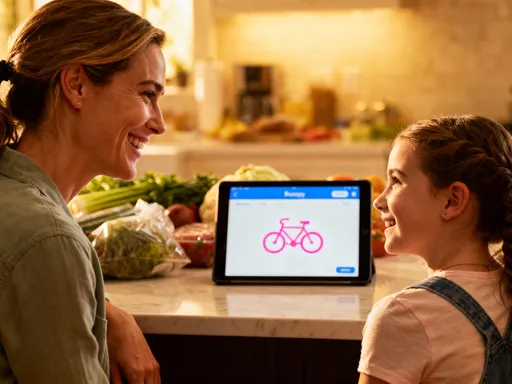
Then I started involving them in small ways. I showed my daughter how I paid for her art class using my phone. 'See this?' I said. 'This is how we pay now. No cash, just a tap.' She was fascinated. So I let her do it. With my permission, of course. I set up a small allowance in a family-friendly app, and now when she wants to buy a book or a craft kit, she uses her own account. She scans the code, taps her screen, and watches the balance go down. No lectures. No guilt. Just experience.
What’s amazing is how naturally it’s taught her about choices. She saved for three weeks to buy a special set of colored pencils. When she finally got them, she held them like treasure. Not because they were expensive, but because she’d earned them. And when she accidentally spent too much on a game and didn’t have enough for the movie she wanted, she didn’t cry—she figured out how to adjust. She started tracking her spending in the app, setting little goals. I didn’t teach her any of that. The system did. And now, when we go out to eat, she’ll say, 'I can pay for my own meal if you add money to my wallet.' That kind of independence? That’s priceless.
Safety and Simplicity: Why Less Physical Cash Means More Peace
I used to carry cash everywhere. My wallet was stuffed with bills, just in case. But I lost it—twice. Once at a park, once on a bus. Each time, it wasn’t just the money I missed. It was the stress. The calls to cancel cards, the hours spent replacing IDs, the feeling of vulnerability. And I worried about my teens, too. When they started going out with friends, I’d slip them a few bills and say, 'Be careful with this.' But what if they lost it? What if someone took it?
Going mostly digital changed that. Now, if my daughter needs money for a movie with friends, I send it through the app. It’s instant, secure, and I can set limits. If her phone is lost or stolen, I can freeze her digital wallet in seconds—no waiting for bank hours, no panic. And she gets alerts for every transaction, so she knows right away if something’s off. It’s not that we’ve eliminated cash entirely—we still use it for small things like lemonade stands or school fundraisers—but it’s no longer the default. And that shift has brought a quiet kind of safety I didn’t expect.
I’ve also introduced my mom to digital payments. She was hesitant at first—'I don’t trust those things,' she said. But after I showed her how to pay her pharmacy bills with her phone, she was hooked. 'No more writing checks,' she told me. 'No more trips to the post office.' And when she accidentally left her phone at a café, the shop owner called me—she’d already locked it remotely. 'I felt so calm,' Mom said. 'I knew nothing could be taken.' That’s the real gift of this technology: it doesn’t just make life easier. It makes it safer. And for someone who worries about her family’s well-being as much as I do, that peace of mind is everything.
The Real Win: Time, Trust, and Emotional Space
If I had to name the biggest benefit of all this, it wouldn’t be convenience. It wouldn’t be speed. It would be space—emotional space. The space to breathe. The space to listen. The space to be present. Because when you’re not constantly worried about forgotten payments or money miscommunications, you have more room for what really matters: your kids’ stories, your partner’s day, your own thoughts.
I’ve noticed I’m less reactive now. Fewer 'I told you to pay that!' moments. Fewer tense conversations about money. Instead, there’s more patience. More calm. We still talk about finances, of course—we plan, we dream, we make decisions together. But the daily friction? That’s gone. And in its place is something softer, warmer: trust. Trust that things will get done. Trust that we’re a team. Trust that even on the chaotic mornings, we’ve got each other’s backs.
And honestly? I have more energy for joy. I’m not carrying that low hum of stress anymore. I can laugh when my son wears mismatched socks. I can sit with my daughter and really listen to her school drama without mentally calculating due dates. I can look at my husband across the dinner table and just smile, instead of wondering if I remembered to renew the car insurance. That’s the real magic. Not the tap. Not the app. But what opens up when the small things stop weighing you down.
Starting Small: Making It Work for Your Morning
I won’t pretend you need to change everything overnight. I didn’t. Start with one thing. Just one. Pick the bill that always slips through the cracks—the one you forget every single time. Set it to auto-pay. Or choose one family expense—like school fees or groceries—and try using a shared wallet for it. See how it feels. You don’t need to go all in. Progress, not perfection.
Invite your partner to join you. Not with a lecture, but with a simple, 'Hey, want to try this for the weekend trip budget?' Make it low-pressure. Let it grow naturally. And involve your kids, too. Let them use a small digital allowance. Watch how quickly they adapt. You’ll be surprised how fast these small changes become habits—habits that give you back time, trust, and peace.
Technology isn’t about flashy gadgets or keeping up with trends. At its best, it’s invisible. It’s the quiet helper in the background, making sure the small things are taken care of so you can focus on the big ones. It’s not about replacing human connection—it’s about protecting it. By removing the friction, by easing the load, by giving us back our mental space, it lets us be more present, more patient, more ourselves. And sometimes, that quiet support is exactly what holds a family together—not with grand gestures, but with a thousand small, seamless moments. One tap at a time.